
Thermal Shock Testing Chamber.
Precision-engineered testing for components exposed to sudden movement between severe cold and high-temperature zones.
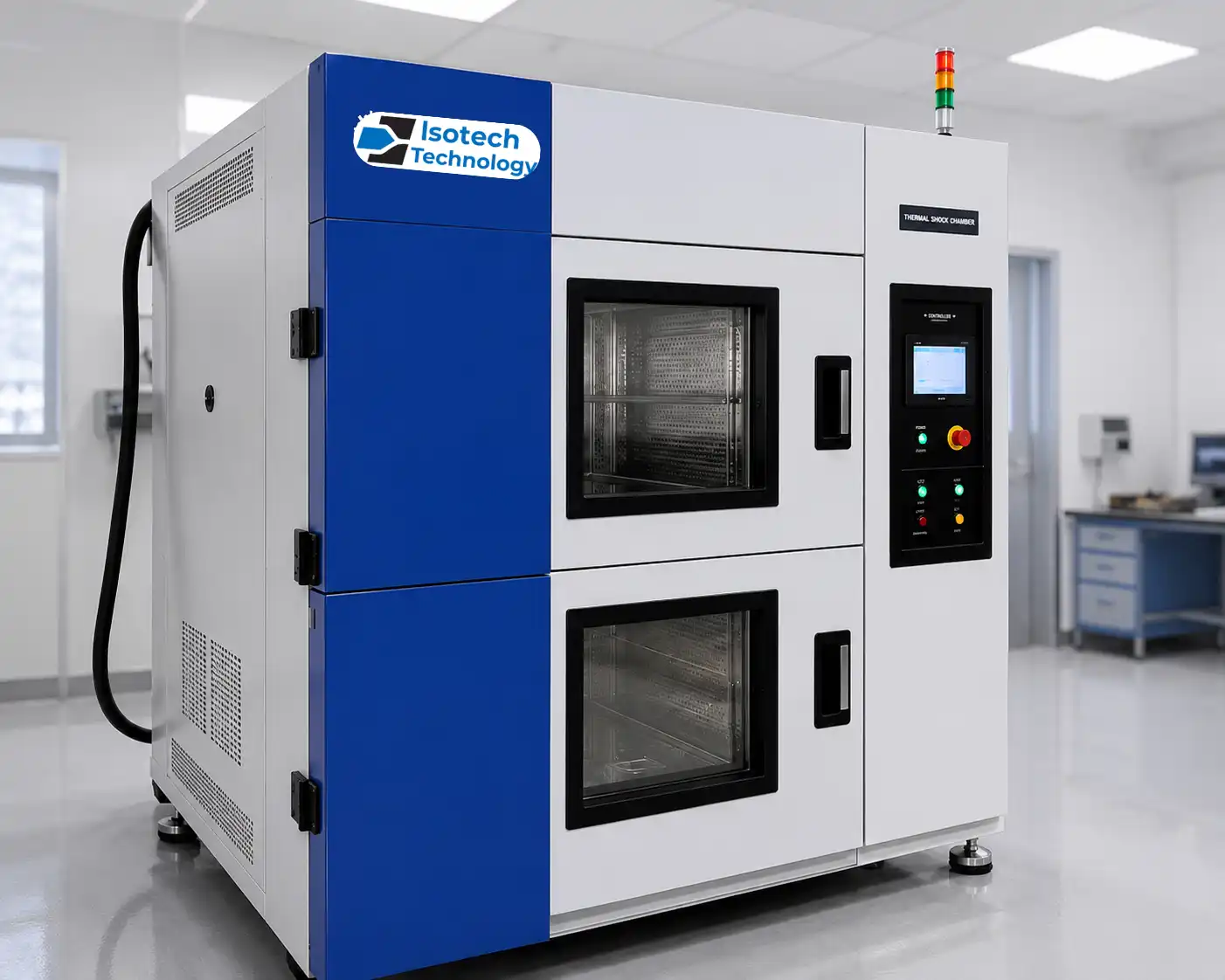
Expose material weakness through rapid temperature change.
ISOTECH Thermal Shock Test Chambers evaluate structural integrity and component performance under sudden movement between extreme temperatures.
The test process reveals effects associated with thermal expansion, contraction and material fatigue. The published two- or three-zone configurations support hot, cold and optional ambient conditions for critical quality-assurance and R&D validation.
ISOTECH states compliance-oriented design for IEC, IS, ASTM, MIL-STD and JSS requirements. Confirm the exact test method, specimen load, transition profile and configuration during technical review.
Cold. Transfer. Hot. Repeat.
A motor-screw basket system transports the specimen between conditioned cabinets with reduced vibration and improved travel linearity.
Cold exposure
The lower test zone conditions the specimen at the defined cold setpoint before transfer.
Hot exposure
The upper test zone applies the programmed high-temperature condition with fast recovery after transfer.
Robust, sealed and built for repeated cycling.
The structure combines a corrosion-resistant test space, insulated external panels and serviceable access around the conditioning system.
Interior test space
Non-frost, vapour- and air-tight construction using high-gloss, vapour-tight welded 16 or 18 SWG 304-grade stainless steel with finished edges and removable shelving.
External structure
Outer construction is available in 16 or 18 SWG CRCA, GI or stainless steel with electrostatic super-fine powder-coat finishing.
Insulation
Asbestos-free and CFC-free mineral-fibre insulation supports thermal retention and helps reduce operating loss.
Door and gasket
A right-hinged front-opening single door uses double-lined grade-A silicone gaskets on the door and chamber body.
Viewing access
The multi-pane viewing window includes defogging heaters with automatic cut-off and suitable illumination for the specimen.
Ports, shelves and drainage
Left- or right-side cable ports with rubber plugs accept measurement and control cables. Shelves and drain fittings are supplied according to specification.
Engineered around fast recovery.
Air circulation, jacket heating, cascade-capable refrigeration and the transfer mechanism work together to create repeatable thermal transitions.
Air circulation
A suitably sized fan motor and impeller distribute conditioned air uniformly inside the cabinet.
- Impeller exposed inside the conditioning plenum
- Drive motor remains outside the chamber
- Detachable plenum cover supports maintenance
- Published noise level below 70 dB
Quick-response heating
Jacket-type air heaters achieve the high-zone setpoint while minimising direct radiation onto the specimen.
- Low thermal inertia supports faster recovery
- Quick specimen response after basket transfer
- Uniform distribution limits test variation
- Heater placement avoids direct specimen radiation
Refrigeration
Air- or water-cooled single-stage and cascade compression systems provide rapid cooling with low vibration.
- Hermetic or boosted semi-sealed compressor options
- Electronic automatic expansion valve
- Water- or air-cooled condenser and plate-fin cooler
- R404A and R23 refrigerants listed in the current specification
Transfer mechanism
The motor-screw basket system is designed for rapid travel between cold and hot cabinets.
- Published automatic movement below 10 seconds
- Improved movement linearity
- Reduced vibration during transfer
- Component changes support lower operating noise
Programme, cycle and review every transition.
The large-screen programmable controller combines TFT LCD touch and key input with programme-pattern graphics, test-history trends and cyclic ramp-and-soak segments.
Profiles and cycles
Multiple programmes and profile segments support ramp, soak and repeatable cyclic operation.
Connected operation
High-speed RS-232/485 ports, networking and USB communications support hardware connection and fast downloads.
Power recovery
The controller includes a published power-failure recovery operating function.
PT100 sensing
A PT100 sensor measures temperature for the control and monitoring system.
Independent protection at critical points.
The published safety architecture protects the operator, chamber and specimen during a malfunction or unsafe access condition.
Two published temperature configurations.
The selected model defines the minimum cold-zone condition and published capacity ceiling. Both models are listed in two- or three-zone forms.
| Model | Temperature range | Zones | Test-space range |
|---|---|---|---|
| ITTSC-70 LO | -70°C to +200°C | 3 / 2 | 100 L to 1000 L |
| ITTSC-40 LO | -40°C to +200°C | 3 / 2 | 100 L to 1500 L |
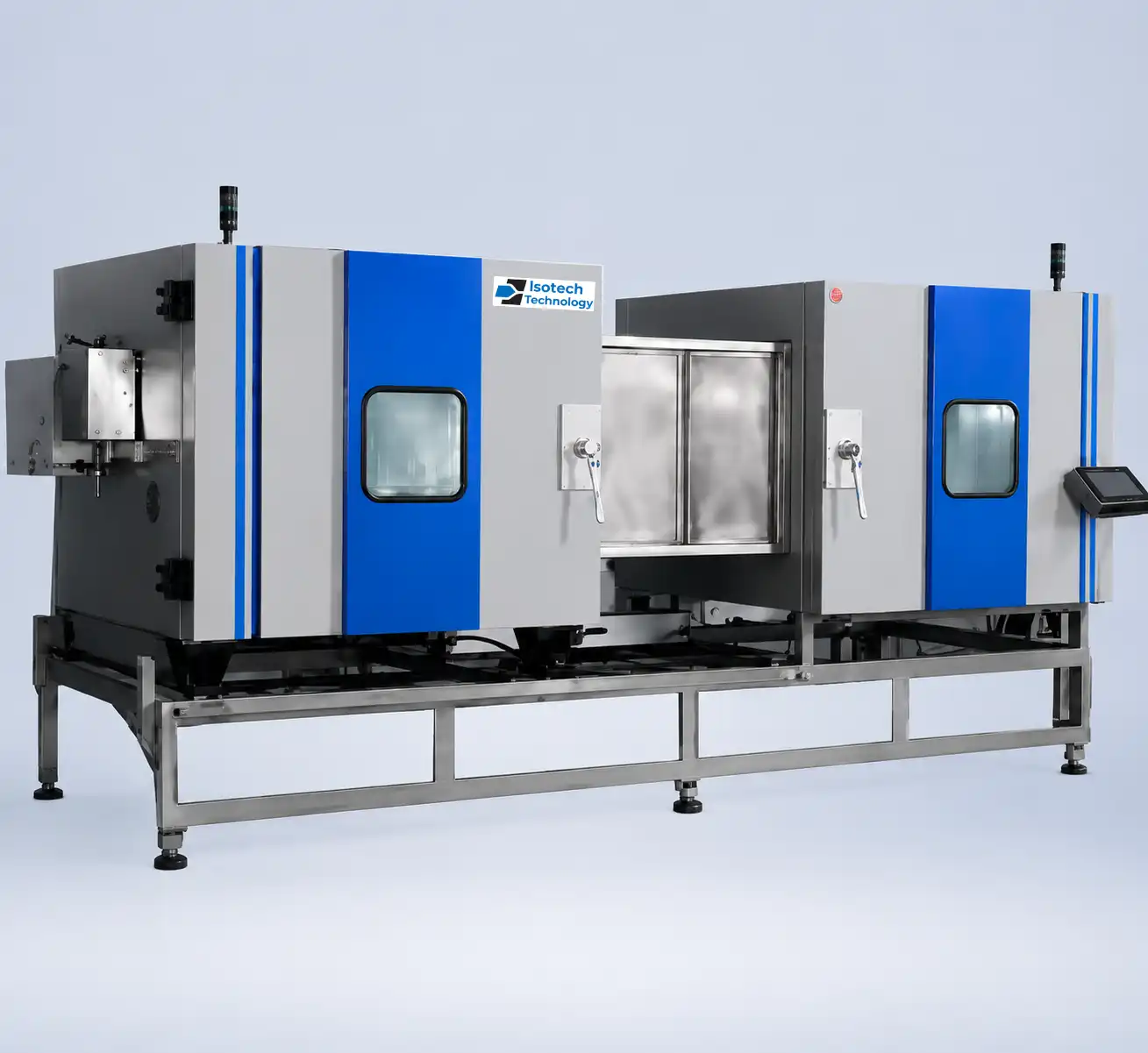
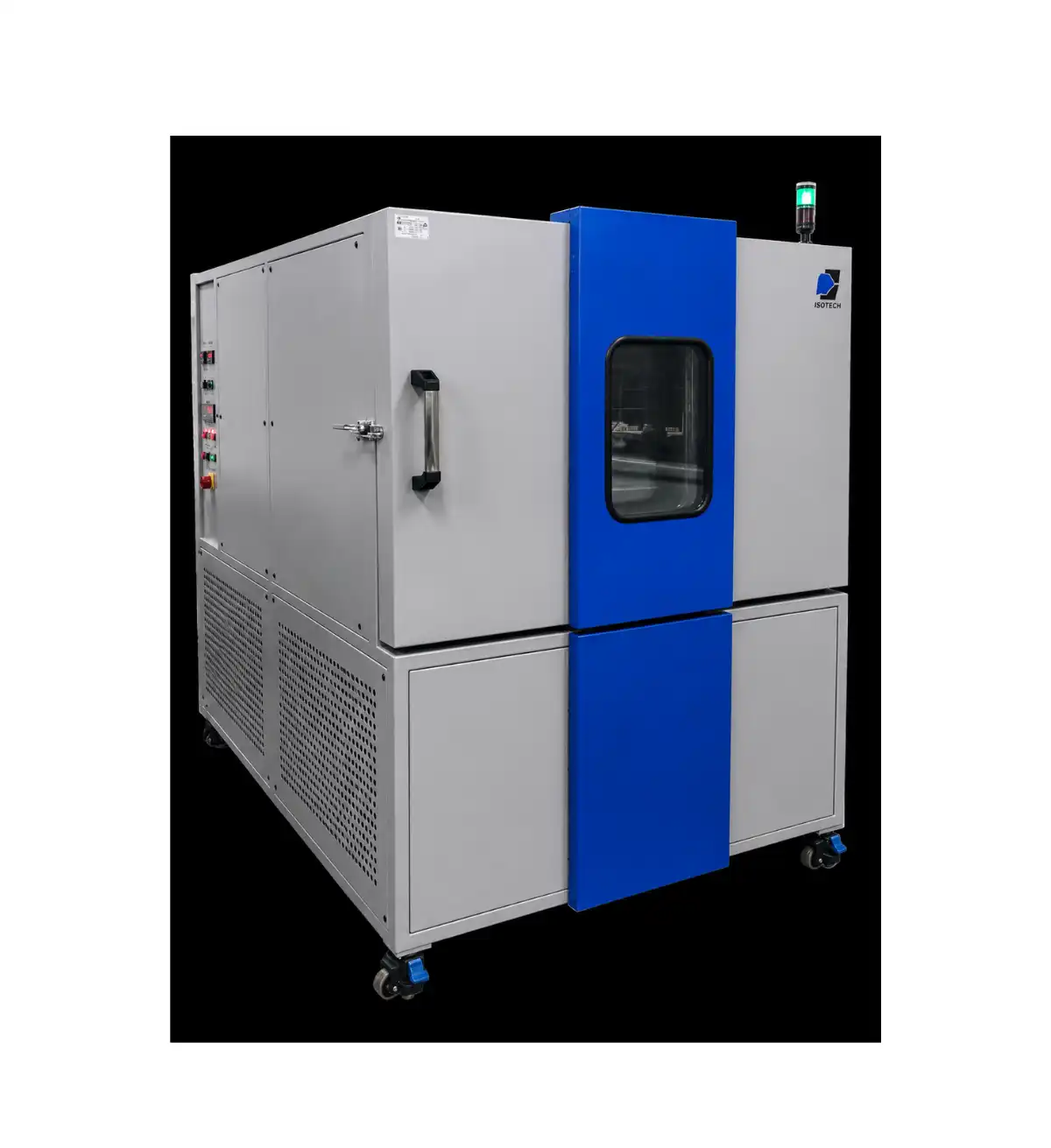
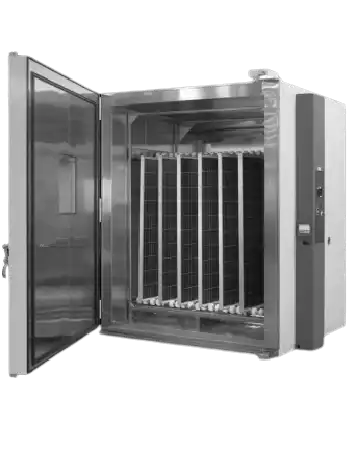
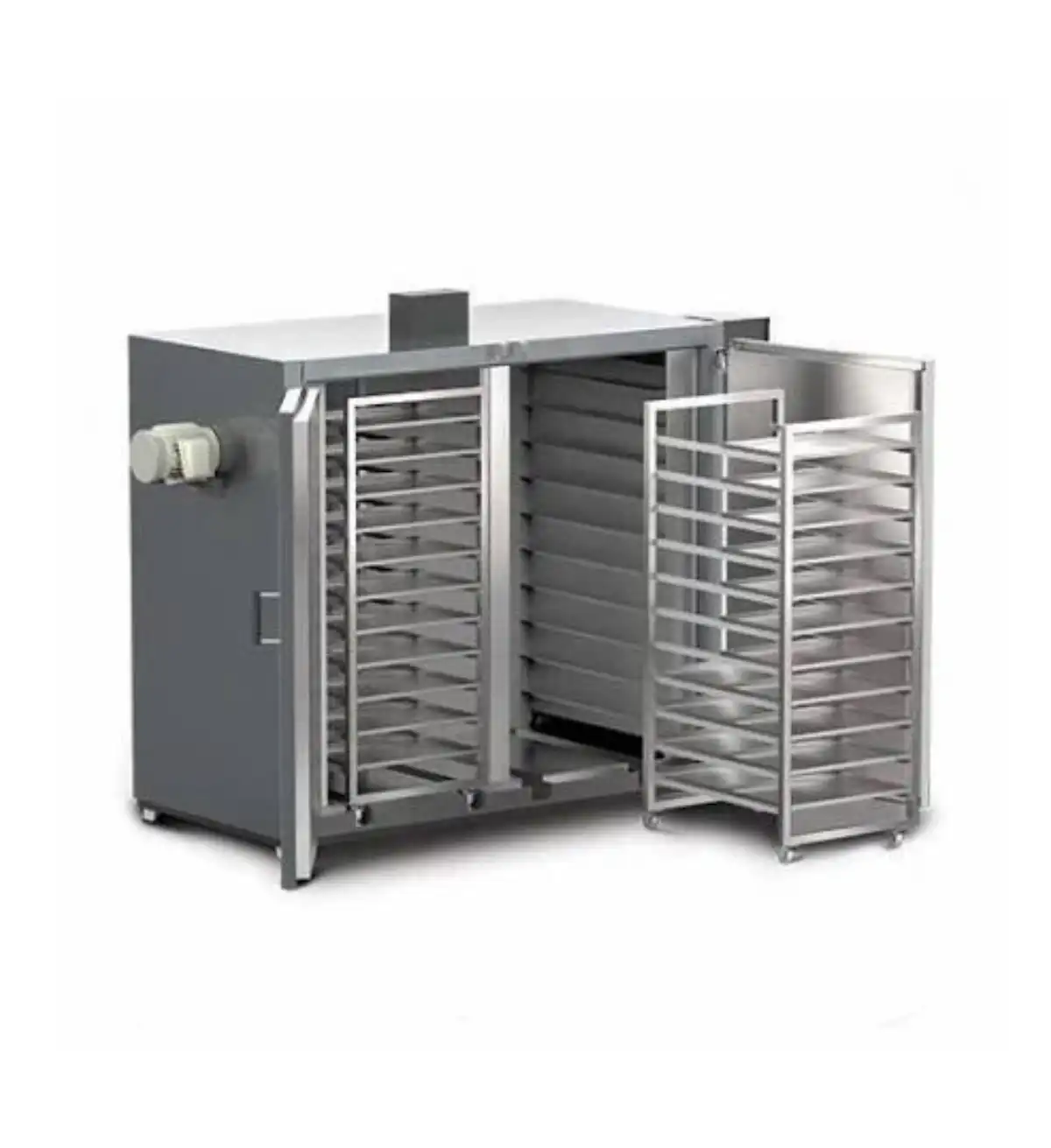
Thermal shock chamber samples.
Published ISOTECH equipment views showing chamber formats and completed systems.
Field feedback from ISOTECH clients.
Published customer reviewsI have been using Isotech environmental chambers for more than 3-4 years and placed orders multiple times. Robust technology, a user-friendly product and good technical support.
Radha KrishnaISOTECH clientThe Salt Spray Chamber product was of high quality, and the customer service was excellent. Overall, I am very happy with the product.
Sanjeev ShettyISOTECH clientNice working environment. Best environmental testing chamber manufacturers from Bangalore.
LokanathISOTECH clientIsotech Technology supplied reliability, durability and quality products to test different environmental conditions.
Malcom RoyISOTECH clientOther environmental test systems.
Specify your thermal shock test.
Share the specimen, required hot and cold limits, dwell time, cycle count, transfer requirement and workspace volume with the ISOTECH engineering team.
Thermal shock chamber guidance.
Answers covering the test method, chamber architecture, customization, standards, service and operation.
Thermal shock testing evaluates how materials and products respond to rapid temperature changes. It helps assess durability and reliability under extreme environmental conditions.
They are specialised test systems with separate hot and cold compartments. A rapid transfer mechanism moves the specimen between them to create the required thermal shock.
ISOTECH publishes high-quality, reliable and customizable thermal shock systems backed by environmental-test experience and technical support.
Yes. Chamber size, temperature range, zone configuration, controller and other test requirements can be reviewed for customization.
Published application sectors include aerospace, automotive, electronics and telecommunications, where reliability under abrupt temperature changes is important.
ISOTECH references IEC, IS, ASTM, MIL-STD and JSS requirements. Confirm the exact method and selected configuration during technical review.
The published ITTSC-70 LO model spans -70°C to +200°C, while the ITTSC-40 LO spans -40°C to +200°C. Final limits depend on the selected configuration and requirements.
ISOTECH provides maintenance and servicing support. Routine preventive attention helps sustain chamber reliability, safety and measurement performance.
Lead time varies with system complexity, capacity, configuration and current demand. ISOTECH provides an estimated schedule during the quotation process.
Yes. ISOTECH publishes training and support services to help customers operate their chambers effectively and produce accurate, repeatable tests.